
English| EUR
Suggested for you
More currencies
Choose a language
Gatlinburg sits at the edge of some of the most varied off-road terrain in the Southern Appalachians. Renters choosing between single-track forest paths and wide ridgeline routes need to understand trail classification systems, seasonal surface conditions, and the gear that separates a smooth ride from a stuck one.
Quick answer
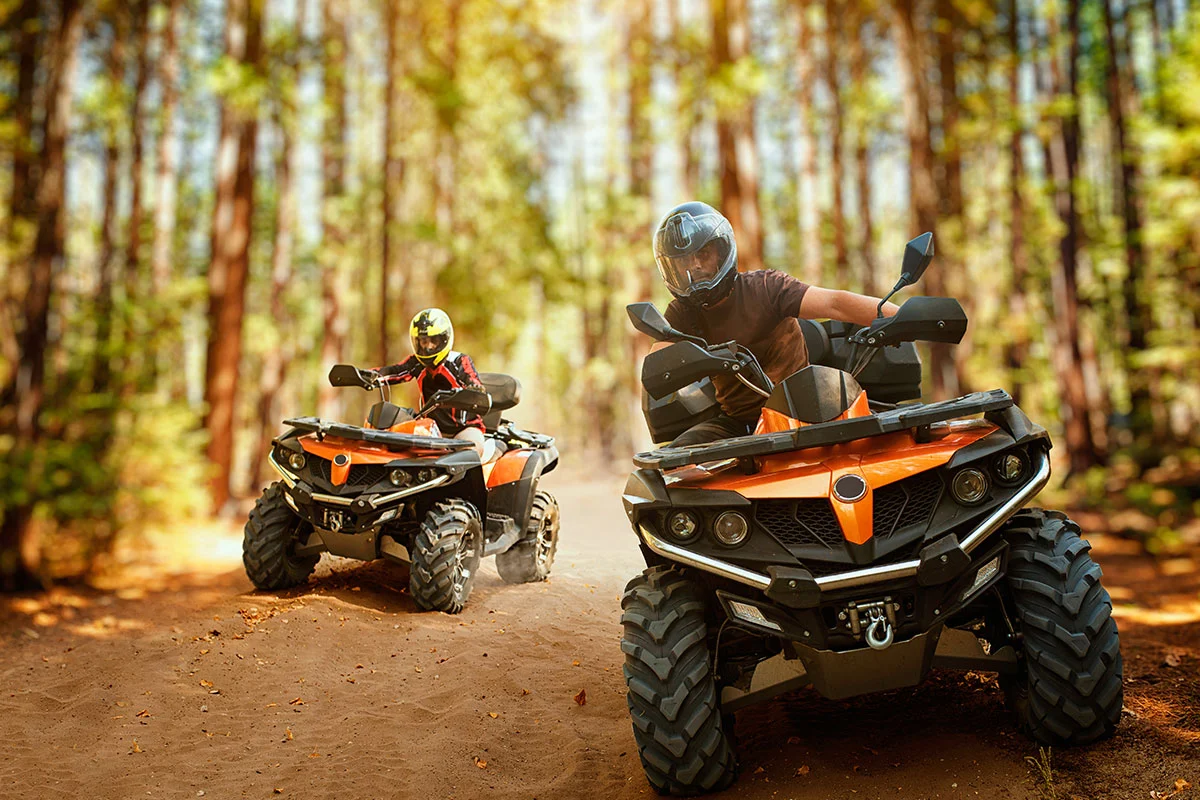
Gatlinburg ATV rentals and trails span three difficulty tiers: beginner-rated paths with graded gravel surfaces suitable for first-time riders, intermediate trails featuring moderate inclines and creek crossings, and advanced routes with steep grades, rocky sections, and technical obstacles. Most rental providers require closed-toe footwear, long pants, and helmets (provided), while recommended gear includes gloves, eye protection, and layered clothing for elevation changes of up to 2,000 feet.
The trail network accessible from Gatlinburg divides into distinct zones, each managed by different land agencies with separate permit requirements and surface maintenance schedules. National Forest routes northeast of town follow old logging roads that climb through hardwood canopy, their packed-dirt surfaces stable in dry months but prone to mud ruts after spring rains. Private trail systems to the south offer groomed paths with engineered drainage, marked by color-coded difficulty signs that align with ski-slope conventions: green circles for flat, wide routes; blue squares for moderate grades and occasional rocks; black diamonds for steep pitches and off-camber sections. Gatlinburg atv rentals and trails operate under a tiered licensing model. Beginner machines—typically 300cc utility quads—limit speed and prioritize stability, appropriate for riders tackling their first off-road experience on groomed paths below 15% grade. Intermediate rentals step up to 500cc sport-utility models with selectable four-wheel drive, the standard choice for riders planning creek crossings or trails with embedded limestone ledges. Advanced terrain demands full-size UTVs with roll protection and differential locks, reserved for experienced operators navigating ridge trails where one side drops 40 feet and the track narrows to eight feet. Terrain shifts with altitude. Valleys hold red clay that turns slick when wet, demanding aggressive tread patterns and cautious throttle control. Mid-elevation trails between 2,000 and 3,500 feet transition to shale and sandstone, surfaces that offer traction but punish underinflated tires with sharp edges. Ridge routes above 4,000 feet encounter exposed rock faces and root networks, technical features that require precise line selection and an understanding of weight transfer during climbs. Rental operators provide helmets certified to DOT standards, but riders supply their own clothing. Denim tears easily on seat edges and offers no abrasion protection; canvas work pants or dedicated riding trousers perform better. Temperatures drop roughly three degrees per thousand feet of elevation gain, so a ride starting at 85 degrees in town can encounter 70-degree air and wind chill at ridge tops. Layered synthetics that wick moisture outperform cotton, which holds sweat and conducts cold. Gloves prevent blisters on hour-long rides, and over-the-glasses goggles shield contact-lens wearers from trail dust that peaks during dry summer months. Trail etiquette follows established patterns: slower traffic yields on uphill sections where momentum matters, and riders encountering horses stop engines and pull aside until the animals pass. Most mapped routes run as loops rather than out-and-back spurs, eliminating the need to reverse-navigate. Cell coverage drops to zero above 3,000 feet, so trail maps provided at rental check-in are not optional. Seasonal windows shape the experience. Late spring brings wildflower understories but also the year's worst mud. Summer offers dry trails and extended daylight, though afternoon thunderstorms build quickly over ridges. Autumn delivers stable surfaces and fall color, with peak foliage drawing crowds that narrow available time slots. Winter closes higher-elevation routes entirely when ice forms on north-facing slopes.
“Terrain shifts with altitude: valleys hold red clay that turns slick when wet, while ridge routes above 4,000 feet encounter exposed rock faces and root networks that demand precise line selection.”
The best arrival window for Gatlinburg ATV trails is 09:00–11:00. Arriving during this period provides cooler temperatures and avoids the peak traffic often found in the afternoon.
Mild, 50°F–70°F
Trails may be muddy due to frequent rain, requiring caution. Vegetation begins to bloom, offering clear visibility along paths.
Warm, 75°F–88°F
Afternoon thunderstorms are common. Early arrival is essential to beat heat and peak trail congestion.
Cool, 45°F–70°F
Drier conditions provide stable ground for technical riding. Fall foliage increases regional traffic throughout the day.
Cold, 30°F–50°F
Icy conditions may close certain elevation-based trails. Clear skies often follow periods of precipitation.
Verdict: For optimal conditions, plan your trip for Tuesday to Thursday with an arrival between 09:00–11:00 during April or October.
Rentals and trail access in the Gatlinburg area operate on a consistent daily schedule throughout the week. Providers maintain these hours to accommodate both morning and evening trail exploration.
Admission to the trail areas themselves is 0 USD. Total costs for your excursion are determined by the specific rental provider and the type of vehicle selected.
Verdict: A typical visitor pays 0 USD for trail access, while total costs fluctuate based on the specific rental vehicle chosen.
The central rental location is situated at 826 East Parkway, Gatlinburg, TN 37738. Access is primarily achieved via personal vehicle or local taxi services, as the facility sits directly off the main thoroughfare.
US-321/East Parkway toward Gatlinburg city center
Direct service to 826 East Parkway
Parking is available on-site at the rental facility. Visitors should plan for standard mountain road navigation when driving into the Gatlinburg area.
Prepare these essentials before heading out on Gatlinburg's off-road trails.
First-time ATV renters often misjudge trail difficulty or their own handling skills, leading to stalled rides, missed turns, and unnecessary strain on both driver and machine. A few preventable errors account for most delays and safety issues on Gatlinburg trails.
Choosing expert trails without prior off-road experience
Start with beginner or intermediate routes to learn throttle control, braking, and hill navigation. Trail difficulty ratings exist for a reason—respect them, especially on your first rental.
Ignoring trail markers and taking unmarked side paths
Stick to marked routes at all times. Unmarked trails may be private property, unsafe, or lead to dead ends that waste your rental window.
Overloading the vehicle beyond its passenger or weight capacity
Check the rental provider's weight and passenger limits before heading out. Exceeding capacity affects handling, braking distance, and trail legality.
Riding too fast on unfamiliar terrain with loose gravel or mud
Reduce speed on gravel, mud, and blind corners. Trails shift with weather, and what looks smooth can hide washouts or embedded rocks.
Failing to confirm reservation and vehicle type in advance
Book early and confirm your ATV model, pickup time, and any deposit requirements the day before. Walk-ins during peak season often face limited availability or long waits.
Everything you need to know about gatlinburg atv rentals and trails
When planning your trip, consider that gatlinburg atv rentals and trails require adherence to safety guidelines and proper reservation timing. Most providers require a valid driver license and a signed waiver before you can access the rugged terrain.
Off-road paths in this region range from beginner-friendly gravel paths to challenging technical inclines for experienced riders. Assessing your skill level helps ensure you select the appropriate vehicle for the specific terrain conditions encountered on your journey.
Safety equipment, including helmets and eye protection, is typically provided by rental companies to protect against debris and dust. Wear sturdy, closed-toe shoes and long pants to ensure comfort and protection while operating your utility task vehicle on local mountain routes.
There is no entrance fee to the property, as the base entry is 0 USD. However, rental prices for these gatlinburg atv rentals and trails vary depending on the specific provider you choose and the type of vehicle selected.
The best arrival window is 09:00–11:00 to take advantage of cooler temperatures and lighter traffic. Early morning departures are generally preferred for those using gatlinburg atv rentals and trails to avoid peak afternoon congestion on the mountain roads.
Many operators offer introductory sessions or guided tours that teach the basics of vehicle handling and trail etiquette. These sessions are perfect for novices who want to enjoy the scenery while maintaining safety on various off-road segments.
The rental facility is located at 826 East Parkway, Gatlinburg, TN 37738. For specific transport inquiries or scheduling, you can reach the office directly at +1-865-412-1125 or visit their official site.